Mannos measures its ESG impact with its first sustainability report, covering the 2025 financial year, introducing a structured system for measuring and reporting its environmental, social and governance impacts.
The document was prepared as part of the NeST4ESG project, co-financed by the Interreg Italy-France Maritime 2021-2027 Programme, and with the support of EETRA, using a voluntary approach inspired by the European VSME standards, the reference framework for sustainability reporting by micro, small and medium-sized enterprises.
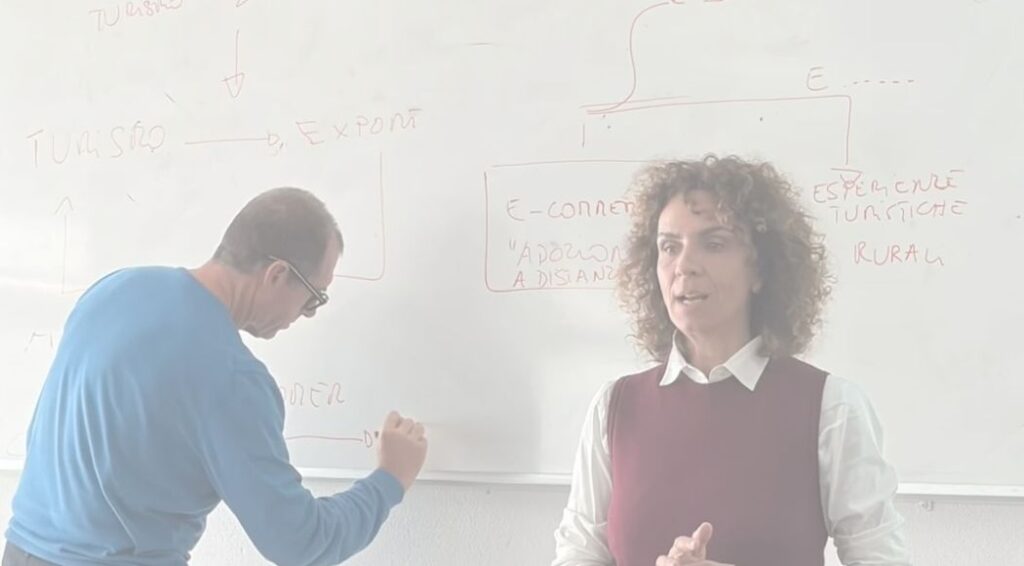
NeST4ESG (Network of STartup 4 ESG) is a cross-border network between Italy and France created to support startups and SMEs with a social and environmental impact in strengthening their ESG skills. Mannos took part in the call for applications promoted by project partner Sardegna Ricerche and, thanks to the specialist services it received, began the transition from a sustainability already present in its values and business model to an approach based on data, measurable indicators and monitoring tools.
For Mannos, this process was an opportunity to move from a sustainability already present in its values and business model to an approach based on data, measurable indicators and monitoring tools, so as to assess and communicate in a more structured way the value generated through its activities.
Sustainability according to Mannos: a letter to our stakeholders
The first Mannos Sustainability Report opens with a letter to stakeholders, in which we share the vision that guides our work, the path we have taken and the commitments we intend to pursue.
For Mannos, sustainability is not only about protecting the environment, but also about valuing work, skills and local communities. It means creating the conditions for Sardinia’s distinctive local products to continue generating economic value and to offer new prospects to those who choose to live and work in these areas.
As we say in the letter: “We do not want merely to tell the story of, or preserve, a heritage: we want to help make it attractive once again, capable of generating income, dignity and prospects for those who choose to build their future in these areas.”
This is the vision that accompanies our growth path and that, thanks to the tools developed through NeST4ESG, we can now begin to measure and report on in a more structured way.
How we measure Mannos’s ESG impact
The report is accompanied by a system of key performance indicators (KPIs), defined to monitor over time the results of our activity and the value generated for the territory. Specifically, the following are measured:
- the number of producers involved;
- the number of local products and elements of the territory promoted;
- the number of adopters and businesses involved;
- the number of participants in rural experiences;
- and, finally, the economic value of the adoptions and of the share allocated to the production chain.
The result is a first quantitative snapshot of the impact generated, a baseline for comparing results in the coming years, identifying areas for improvement and guiding future business decisions.
Governance, supply chain and the path towards becoming a Benefit Corporation
The process included an initial materiality analysis, involving the network of producers, and the formalization of the Code of Ethics, the Producers’ Charter and criteria for qualifying and monitoring the partners in the supply chain.
The work also contributed to defining three Common Benefit Objectives and the related monitoring methods:
- enhancing the supply chain: product, producer and supplier;
- safeguarding and regenerating the Sardinian territory;
- spreading awareness of local culture and engaging the community.
This lays the foundations for Mannos’s future evolution towards the Benefit Corporation (Società Benefit) model.
Results achieved with the NeST4ESG project
Alongside the measurement of impacts and the strengthening of governance, the project made it possible to develop tools dedicated to communicating sustainability.
A specific communication strategy was developed, with guidelines that favor concrete, verifiable data in order to prevent the risk of greenwashing. The Sustainability Manifesto and a reader-friendly version of the Impact Report were produced, tools that make the company’s results and commitments more accessible to producers, customers, partner companies and the community.
The project’s main result is the introduction of a sustainability management method based on impact measurement, reporting and transparency. For a micro-enterprise like Mannos this is a significant change, because it now has methodological and organizational tools to assess the value generated more systematically, communicate documentable results and progressively integrate ESG criteria into its strategic choices.
Those who choose Mannos can count on a declared method and on data they can consult, and the path undertaken with NeST4ESG has made verifiable what until now relied, above all, on trust.
Want to generate a concrete ESG impact for your business? Take part in our rural sustainability model: it supports local producers, protects the territory and contributes to your company’s sustainability strategies. Find out how corporate adoption works and how to integrate it into your sustainability strategies.