How can a remote adoption become a reason to travel? And how do you build a rural tourism experience starting from the work of those who live and produce in the countryside?
These were the questions I started from when Professor Giacomo Del Chiappa invited me to present Mannos to the students of the Business Management and Tourism Marketing course at the University of Sassari, on the UniOlbia campus.
At that very same university, during the October graduation session, a thesis was defended that had chosen Mannos as a case study, and the meeting gave me the opportunity to share firsthand how the project took shape.
I started from the relationship between those who produce and those who buy—from that curiosity that can arise even when looking at a piece of cheese or a jar of honey, when you wonder who made it, where it comes from, and how much work goes into it. Talking about Mannos also means treading lightly into the history of a family and a territory, into the bonds between people, into knowledge passed down through generations, and into a deep connection with the land.
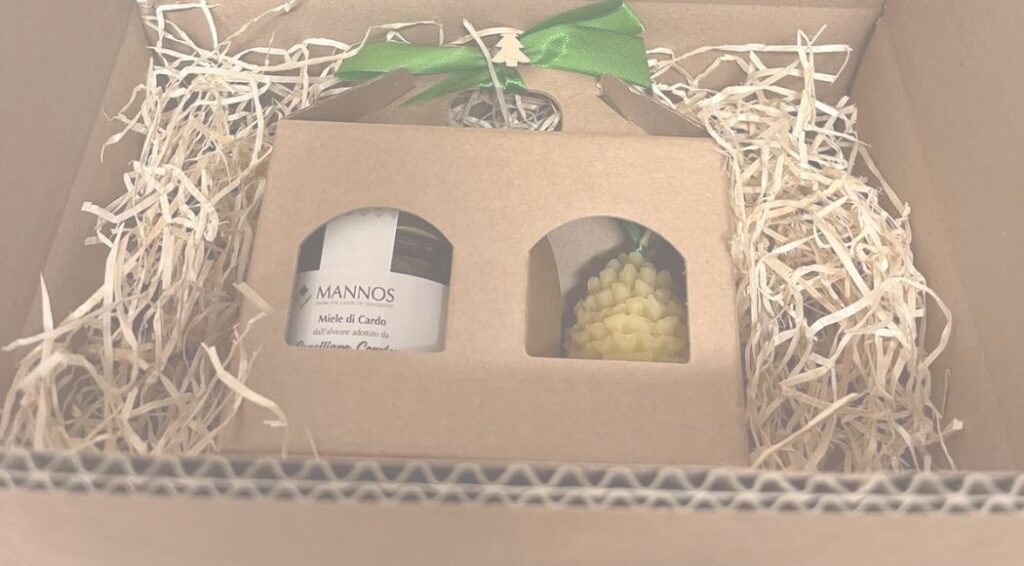
Through remote productive adoptions, people can follow the work in the fields, sheepfolds, and apiaries through updates and direct storytelling from the producers, so that when the product arrives on the table, the person who adopted it already knows a bit of its story. Sometimes, after following that work for months, the desire arises to go and visit those who do it, and that is how an adoption can become a reason to travel.
Countryside experiences take shape starting from what producers do every day and what, in that specific season, they can show and share with those who visit them.
While I was speaking, Professor Del Chiappa was taking notes on the board and lining up the steps, starting from the link between tourism marketing and territorial marketing. Seeing side by side decisions I had made at different times helped me better understand how they fit together, from choosing the target audiences to how we promote the adoptions and experiences.
In class, I explained how market research helped me distinguish two audiences—private individuals (B2C) and companies (B2B)—and understand what each looks for in Mannos. Among private individuals, there are those who adopt to reconnect with Sardinia, those who choose an adoption as a gift, and those who, while planning a trip, look for an experience to share with a producer. A company can choose to gift an adoption to its clients and, through that gesture, communicate its support for local production.
In building these proposals, I take into account what producers can offer, because if a company chooses a gift for its clients, available quantities and the time when the product will be ready are part of the decision from the very beginning. The way I tell the story of Mannos also depends on who I want to reach and what might interest them: on Instagram, I can show what a day in the apiary looks like, while on LinkedIn, I can share how we built an adoption project together with a company.
Speaking to twenty-year-olds who will want to start a business tomorrow was moving, also because it gave me a chance to re-examine my choices through the questions the students tackle in their course—from how a business is organized and finds its audience to how you build a rural tourism experience that fits into the daily schedule of those who work in the countryside.
With Mannos, I would like to help create opportunities for those who choose to stay and farm the land and for those who envision their future in tourism or hospitality. These are paths that cross every time curiosity about a product leads someone to discover the place where it is born and gives the producer the chance to talk about their craft. It is also through these relationships that an entrepreneurial project takes shape and engages with the territory in which it operates.
Every time I talk about Mannos, I understand my own project a little better, and this time too I left the classroom richer and more aware of the journey taken so far.